
How Does Mobile Site Speed Affect Dealership Sales?
A slow mobile website actively kills car sales by increasing buyer bounce rates, eroding digital lead conversion, and triggering Google organic ranking penalties . Because over 53% of mobile users abandon a page that takes more than 3 seconds to load, slow-loading vehicle imagery, interactive 360 walkarounds, or trade-in calculators cause high-intent buyers to leave and purchase from a competitor. Fixing mobile performance requires technical Core Web Vitals optimization and executive-level technical leadership to stop revenue leaks and lower customer acquisition costs.
The Mobile Retail Reality
In modern automotive retail, your showroom’s front door is no longer made of glass and aluminum, it is a six-inch smartphone screen. Today’s shoppers evaluate specs, calculate trade-ins, and schedule test drives while standing in line or sitting at red lights. When your mobile platform lags, your sales pipeline leaks revenue in real time. Below, we break down how page speed directly impacts your bottom line, how search engines evaluate your technical infrastructure, and why fixing it demands experienced technical oversight.
How Does Mobile Site Speed Affect Automotive Sales?
Mobile site speed directly dictates your dealership’s conversion rate and search engine visibility. When a mobile user encounters slow loading times, bounce rates increase exponentially while lead submissions drop. Furthermore, Google utilizes Mobile-First Indexing, meaning search engines evaluate and rank your website based exclusively on its mobile performance, not its desktop version. A slow mobile site penalizes your organic visibility and inflates your Pay-Per-Click (PPC) customer acquisition costs.
What Happens When Your Mobile Site Stalls?
Automotive websites are naturally heavy. They host dynamic inventory feeds, high-definition photo galleries, video players, live chat widgets, and third-party credit soft-pull tools. Without high-level technical management, these scripts create server drag that ruins the mobile user experience.
Mobile Speed Threshold | Impact on Shopper Behavior | Impact on Search & Ad Performance |
1 – 2 Seconds | Peak engagement; seamless browsing across VDPs. | Maximum Google Quality Score; lowest PPC Cost-Per-Click. |
3 Seconds | 53% of mobile visitors bounce. | Noticeable drop in Google Local Pack map rankings. |
5+ Seconds | 90%+ bounce rate; total lead abandonment. | Heavy organic ranking penalties; wasted ad spend. |
When a prospective buyer clicks an ad for a flagship vehicle on your lot, every second of lag erodes trust. If your mobile site feels clunky or slow, buyers subconsciously assume your service department and sales team operate with the same lack of efficiency.
Understanding Google Core Web Vitals in Automotive Retail
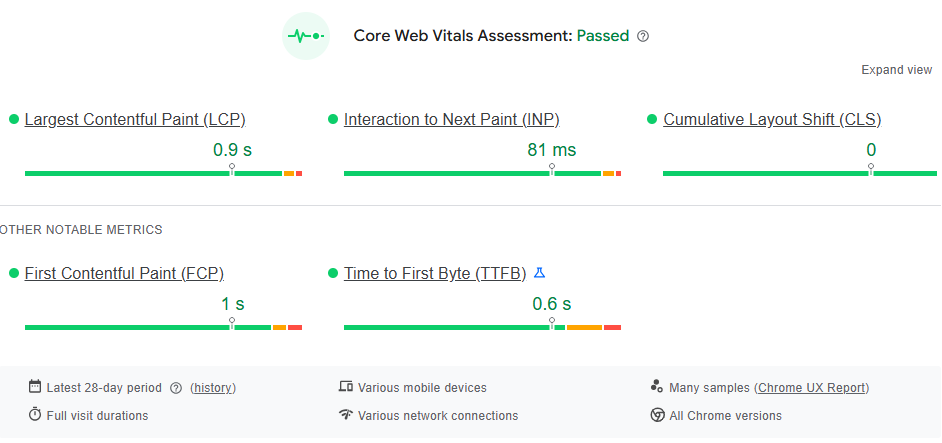
To determine whether your mobile platform is fit for modern search, search engines evaluate three specific metrics known as Core Web Vitals:
- Largest Contentful Paint (LCP): Measures how long it takes for the main content (usually your hero vehicle image on a VDP) to load. Target: Under 2.5 seconds.
- Interaction to Next Paint (INP): Measures how quickly your site responds when a user taps a button, opens a slide-out filter, or clicks “Schedule Test Drive.” Target: Under 200 milliseconds.
- Cumulative Layout Shift (CLS): Measures visual stability. If your page elements jump around as third-party ad scripts load, causing users to tap the wrong button, your CLS score drops. Target: Under 0.1.
If your current web provider or junior team is not actively optimizing these three technical pillars every time new inventory or third-part
Why Generic Web Vendors Fail to Solve the Speed Problem
Most dealerships rely on templated website providers built for general commerce or legacy inventory management. These providers often install heavy, unoptimized scripts across all pages, resulting in bloated code structures that choke mobile processors.
Furthermore, traditional web vendors act as task-executors not strategic leaders. They do not monitor how site speed impacts your sales team’s lead response times or your overall marketing Return on Investment (ROI).
Solving the mobile speed equation requires more than compressing a few image files; it demands holistic oversight across your entire digital tech stack.
Bridging the Technical Gap with LogosTek Fractional CMO Leadership
Overcoming mobile performance bottlenecks requires a bridge between complex web development and real-world automotive strategy. This is where Logostek delivers unbeatable value.
Through our Fractional CMO Services, we provide executive-level marketing and technical oversight tailored specifically to dealership operations. We don’t just point out that your site is slow; we actively manage your web vendors, audit third-party script bloat, and align your mobile user experience with high-converting inventory features.
By pairing technical precision with custom strategic leadership, Logostek ensures that your mobile platform loads instantly, ranks higher on AI answer engines, and turns casual browsers into confirmed showroom appointments.
Here are the Next Steps to Fix Your Mobile Sales Funnel
- Run a Technical Speed Audit: Test your top-performing Vehicle Detail Pages (VDPs) using Google PageSpeed Insights to review your current Core Web Vitals scores.
- Audit Third-Party Scripts: Remove outdated tracking pixels, redundant chat widgets, and slow-loading inventory plugins.
- Optimize Asset Delivery: Ensure all vehicle photography utilizes next-gen image formats (like WebP) and responsive image sizing for mobile devices.
- Secure Executive Leadership: Stop letting technical glitches drag down your sales performance. Partner with Logostek to gain unified vendor management, high-performance web optimization, and clear data visibility.
Is Your Mobile Site Costing You Test Drives?
Don’t let slow load times hand your leads to competing dealerships. Let the automotive marketing experts at Logostek optimize your digital footprint for maximum speed and revenue generation.